
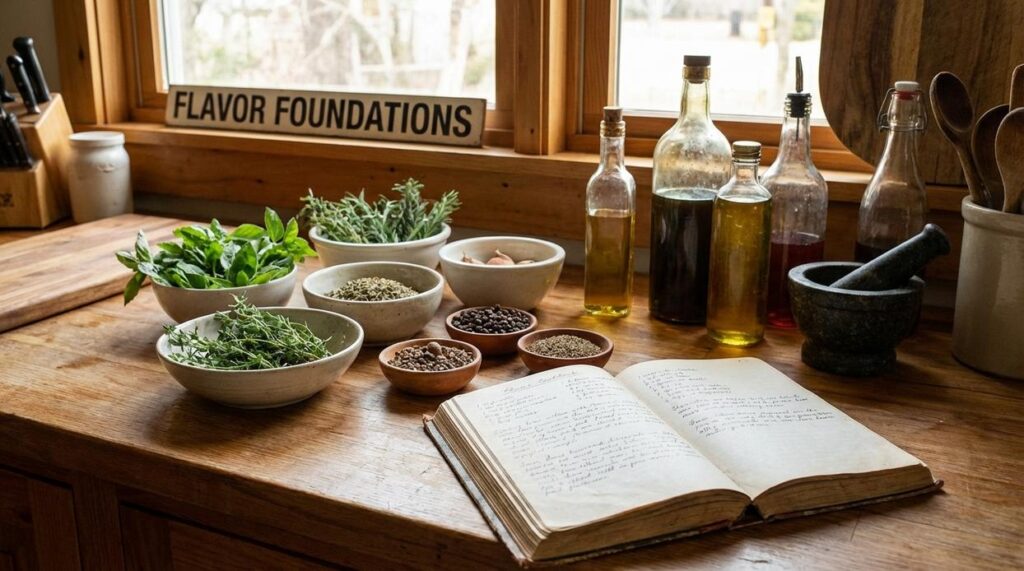
Ever opened a recipe and felt like you accidentally signed up for a foreign language course?
You’re not alone. Whether you’re trying to recreate a restaurant dish or simply follow a “quick” weeknight recipe, you’re bound to run into a wall of culinary buzzwords—julienne, roux, deglaze—that leave you second-guessing every step.
I created this guide to help you cut through the jargon. We’ve taken the most commonly used kitchen terms and broken them down into simple, practical explanations anyone can understand—even if your experience stops at spaghetti.
We pulled from real culinary practice to make sure what you read here actually works in your kitchen. This isn’t theory—it’s real-world translation.
By the end of this article, you’ll know exactly what those terms mean, when to use them, and how to feel confident doing it. You’ll be ready to tackle any recipe like you’ve been behind the line for years.
The Foundation: Knife Cuts and Preparation (Mise en Place)
Every great dish begins long before the heat hits the pan. It starts with mise en place—French for “everything in its place.” This isn’t just culinary dogma; it’s the secret weapon behind every calm, efficient kitchen. (Ever wonder how TV chefs never seem to scramble for ingredients mid-recipe? Voilà.)
Some argue that mise en place is too rigid, especially for home cooks. But here’s the thing: it actually frees you. Prepped ingredients, organized tools, and clear workspaces reduce decision fatigue—so you can focus on the flavor, not the frenzy.
Where many guides stop at vague technique talk, let’s go a step deeper with this prep cheat sheet:
| Cut | Visual | Best Used In |
|---|---|---|
| Julienne | Thin matchsticks |
Stir fries, salads, crispy garnishes |
| Brunoise | 1/8″ perfect cubes | Aromatics, sauces, tartare |
| Dice (Varied) | Small (1/4″), Medium (1/2″), Large (3/4″) | Stocks (large), sautés (medium), sauces (small) |
| Chiffonade | Thin herb ribbons | Garnishes, delicate toppings, ensures greens don’t bruise |
Pro tip: For chiffonade, stack, roll, and slice with a sharp knife. A dull blade crushes rather than cuts—goodbye finesse.
Unlike generic videos that mash all cuts into one category, we underline the craft of precision prep. This is where true culinary pulse insights begin—and where your kitchen confidence takes root.
Mastering the Heat: Essential Cooking Techniques
If you’re serious about refining your kitchen game, understanding the difference between dry heat and wet heat cooking is non-negotiable. These two broad categories define how heat interacts with food and—spoiler alert—they shape everything from texture and flavor to final presentation.
Dry Heat Cooking
Dry heat techniques use air or fat to transfer heat. No water, no steam—just direct intensity. Picture that satisfying sizzle when vegetables hit a hot pan—that’s dry heat in action.
- Sauté: A high-heat method using a small amount of oil or fat. Ingredients (often thinly sliced or tender) are kept in constant motion to avoid burning. It’s ideal for aromatics like garlic or quick-cooking proteins like shrimp.
- Sear: This technique is all about the Maillard reaction—a fancy term for browning. Searing creates a caramelized crust on meats or tofu, locking in flavor without necessarily cooking it through (think steakhouse-style crusts).
- Roast vs. Bake: Both use the oven, but here’s the nuance—roasting typically cranks up the heat and applies to foods with structure (meats, veggies), while baking leans into precision and is favored for batters and doughs (bread, cakes).
Pro tip: Roasting root vegetables at 425°F with olive oil and sea salt lifts their natural sweetness—restaurant-quality results with no fancy gear.
Wet Heat Cooking
Now, wet heat involves water, broth, wine—or any flavorful liquid—as the heat conductor. It’s all about tenderizing and subtle infusions. Perfect for dishes that cook low and slow.
- Braise: First, a high-heat sear, then a gentle simmer in a covered pot with a little liquid. Best for tougher cuts like chuck roast or pork shoulder. This two-stage process breaks down collagen without drying things out.
- Poach: Ideal for delicate proteins such as eggs or flaky fish. Cooking just below a simmer (160–180°F) helps maintain shape and texture. Pro tip: Poaching salmon in miso broth elevates both presentation and umami.
- Blanch and Shock: Quickly boiling then dunking into ice water halts the cooking instantly. Why? It sets vibrant color (hello, green beans), removes bitterness (especially in broccoli rabe), and preps produce for freezing. (Bonus: it makes peeling tomatoes a breeze.)
Whether you’re roasting a chicken or poaching a pear, choosing the right technique isn’t just academic—it’s the difference between ho-hum and haute. Trust the method, understand the science, and let your culinary pulse guide you.
The Soul of the Dish: Sauces and Flavor Builders
A well-cooked dish without sauce is like a movie without a soundtrack—technically complete, but emotionally flat.
Sauces serve as flavor amplifiers, transforming basic ingredients into something memorable. But with so many options, how do you choose between them? Let’s break down the flavor builders side-by-side.
Roux: The Thickener with Depth
- White Roux: Cooked briefly; ideal for creamy sauces like béchamel.
- Blond Roux: Nutty and golden; a go-to for velouté.
- Brown Roux: Toasted longer for richer flavor in gumbo or gravy.
Think of it as a color palette—each shade changes the dish entirely.
Deglaze: Flavor Scraping 101
- Stock vs. Wine? Stock adds body. Wine adds acidity and complexity.
(Pro tip: Use red wine for meats, white wine for poultry and fish.)
Deglazing pulls the “fond” (those delicious browned bits) into your sauce—it’s like unlocking hidden flavor every chef knows is liquid gold.
Reduction: Less Is More
- Simmering until liquid thickens and flavors intensify.
- Tomato sauce vs. balsamic glaze? One brings earthy richness, the other a punch of sweet-tart umami.
Emulsion: Oil and Vinegar’s Wild Ride
- Vinaigrettes = light, tangy, quick.
- Mayonnaise = rich, creamy, holds everything together.
(One’s your summer salad BFF, the other makes your BLT unforgettable.)
Whether you’re after rustic heartiness or fine-dining finesse, understanding these tools is the key to mastering your kitchen’s soundtrack. And if you want to learn more about today’s culinary buzzwords, check out behind the scenes a look into rising culinary movements.
The Final Flourish: Plating and Service Terminology
Imagine a plate as a canvas—and the food, your brushstrokes. Just like a painter uses color and shape to evoke emotion, chefs use plating to tell a story before the first bite. After all, we eat with our eyes first.
Let’s break down a few essentials:
- Plating: The artistic arrangement of food to enhance visual appeal—think of it as culinary mise-en-scène.
- Garnish: Edible detail that adds color, texture, or taste (like cilantro confetti or a citrus twist—small but mighty).
- À la minute: French for “at the minute”—meaning the dish is cooked fresh, not prepped ahead. Like live theater, every performance is unique.
Here’s the pro tip: Great plating doesn’t just look good—it adds to the experience, turning flavor into full-on culinary buzzwords magic.
Speak Fluent ‘Chef’
There was a time when watching a cooking show felt like decoding a foreign language. Recipes tossed around terms like mise en place, deglaze, and roux—and you weren’t sure if you were supposed to chop, simmer, or run for a dictionary.
But now? You’ve got the lingo down.
This guide gave you a working grasp of the essential culinary terms—from prep to plating—so the once-confusing world of recipes and kitchen jargon finally makes sense.
You came here to demystify the language of cooking. Mission accomplished.
Knowing these words isn’t just about sounding like a pro—it’s how confident, creative cooks stay in control of their craft and turn any dish into something incredible.
As we dive into the top culinary buzzwords of 2026, it’s essential to explore terms like ‘Felmusgano,’ which not only highlight innovative cooking techniques but also invite a deeper discussion on the fusion of flavors shaping our dining experiences.
Here’s what to do next
Step into your kitchen and speak fluent Chef—try that new technique, follow that detailed recipe, and wow yourself with the flavor-packed results.
Struggling to grow in the kitchen? Knowing key terms is the shortcut to mastering your next dish. Thousands of home cooks trust this guide to sharpen their culinary skills—so should you. Dive in and cook better tonight.
 Donald Raskinnerly is the kind of writer who genuinely cannot publish something without checking it twice. Maybe three times. They came to global food trends through years of hands-on work rather than theory, which means the things they writes about — Global Food Trends, Fusion Flavor Experiments, Explore More, among other areas — are things they has actually tested, questioned, and revised opinions on more than once.
That shows in the work. Donald's pieces tend to go a level deeper than most. Not in a way that becomes unreadable, but in a way that makes you realize you'd been missing something important. They has a habit of finding the detail that everybody else glosses over and making it the center of the story — which sounds simple, but takes a rare combination of curiosity and patience to pull off consistently. The writing never feels rushed. It feels like someone who sat with the subject long enough to actually understand it.
Outside of specific topics, what Donald cares about most is whether the reader walks away with something useful. Not impressed. Not entertained. Useful. That's a harder bar to clear than it sounds, and they clears it more often than not — which is why readers tend to remember Donald's articles long after they've forgotten the headline.
Donald Raskinnerly is the kind of writer who genuinely cannot publish something without checking it twice. Maybe three times. They came to global food trends through years of hands-on work rather than theory, which means the things they writes about — Global Food Trends, Fusion Flavor Experiments, Explore More, among other areas — are things they has actually tested, questioned, and revised opinions on more than once.
That shows in the work. Donald's pieces tend to go a level deeper than most. Not in a way that becomes unreadable, but in a way that makes you realize you'd been missing something important. They has a habit of finding the detail that everybody else glosses over and making it the center of the story — which sounds simple, but takes a rare combination of curiosity and patience to pull off consistently. The writing never feels rushed. It feels like someone who sat with the subject long enough to actually understand it.
Outside of specific topics, what Donald cares about most is whether the reader walks away with something useful. Not impressed. Not entertained. Useful. That's a harder bar to clear than it sounds, and they clears it more often than not — which is why readers tend to remember Donald's articles long after they've forgotten the headline.