
Planning the perfect international food night sounds exciting—until you realize how many dishes, cuisines, and logistics are involved. It can feel like you’re juggling the entire world on a dinner plate.
If you’re here, you’re probably ready to throw an unforgettable event that brings global flavors to your table—but you’re also wondering how to actually pull it off without getting overwhelmed.
That’s where this guide comes in.
We’ve hosted dozens of events just like this and cracked the code on what works and what doesn’t. This article gives you a simple step-by-step framework—from choosing a theme and balancing your menu to managing prep and timing like a pro.
By the end, you’ll have everything you need to host a smooth, delightful, and memorable international food night your guests will rave about. No stress. Just great food and even better company.
Step 1: Choosing Your Culinary Destination (The Theme)
Let’s be honest—calling it “Italian Night” and putting out a pasta bar isn’t going to impress anyone anymore (unless your crowd is into boiled penne and jarred sauce—hey, no shame).
A standout international food night starts with a theme that’s specific, creative, and rooted in real culinary traditions. Research by Eventbrite shows that 75% of guests say a unique theme significantly increases their engagement and memory of an event. That’s data you can taste.
Take “A Taste of the Silk Road”. This isn’t just a history lesson—it’s flavor travel. We’re talking Persian tahdig, Central Asian plov, and rinsed-through-with-sesame Chinese hand-pulled noodles. It’s not cluttered fusion; it’s curated overlap. (Think Marco Polo meets spice market.)
Or go for “Modern Mexico City Street Food”—elevating taco night with esquites, cochinita pibil tostadas, and even an herby, spicy aguachile. According to the USDA’s 2025 projections, global interest in traditional street foods is rising, especially among food-savvy millennials.
And if you’re dreaming of the Italian coast, skip the clichés. A Coastal Italian Feast showcases lemon-zested pastas, branzino al cartoccio, and raw veggie antipasti that feel more Capri than Little Italy.
Pro-Tip: Match your theme with dishes that scale easily—aka less stress, more flavor. And don’t forget to consider your guests’ dietary needs.
Want flavors to shine and waste to shrink? Try understanding kitchen sustainability reduce waste while cooking to make every bite count.
Step 2: Designing a Balanced and Impressive Menu
Creating a menu isn’t just about listing three random dishes—it’s about crafting a culinary narrative. Think of your menu like a well-edited playlist: it needs rhythm, variety, and a standout middle track (your main course) that brings it all together.
Some hosts get caught up trying to make every dish flashy. But here’s the thing—if everything is dazzling, nothing stands out.
That’s where The Rule of Three comes in. You want:
- A vibrant appetizer to start the conversation (literally and figuratively),
- A show-stopping main course that anchors the experience,
- A simple-yet-elegant dessert that ends things on a high note (without the sugar crash).
Now, let’s talk flavor balance. It’s easy to make everything rich and hearty because those dishes feel more “impressive.” But an overload of creamy, savory flavors can fatigue your guests. Balance richness with brightness. For example, if your main is a slow-cooked lamb stew, choose an appetizer with tang—like a yogurt-based dip—to contrast it.
Texture matters too. Pair a crunchy flatbread with your creamy appetizer. Follow chewy hand-pulled noodles with a silky panna cotta. It’s like a good wardrobe: mix your fabrics (metaphorically).
Here’s a real-world example for an international food night themed around Central Asia:
- Appetizer: Borani Esfenaj (Persian spinach and yogurt dip) with flatbread
- Main Course: Lagman (lamb and vegetable stew over hand-pulled noodles)
- Dessert: Cardamom and pistachio panna cotta
Pro tip: Choose dishes with components that can be made in advance. Yogurt dips and panna cotta, for instance, actually improve after resting in the fridge. (Your future self will thank you.)
By curating contrast, planning prep wisely, and sticking to the rule of three, you’ll create a menu that’s impressive and effortless to execute.
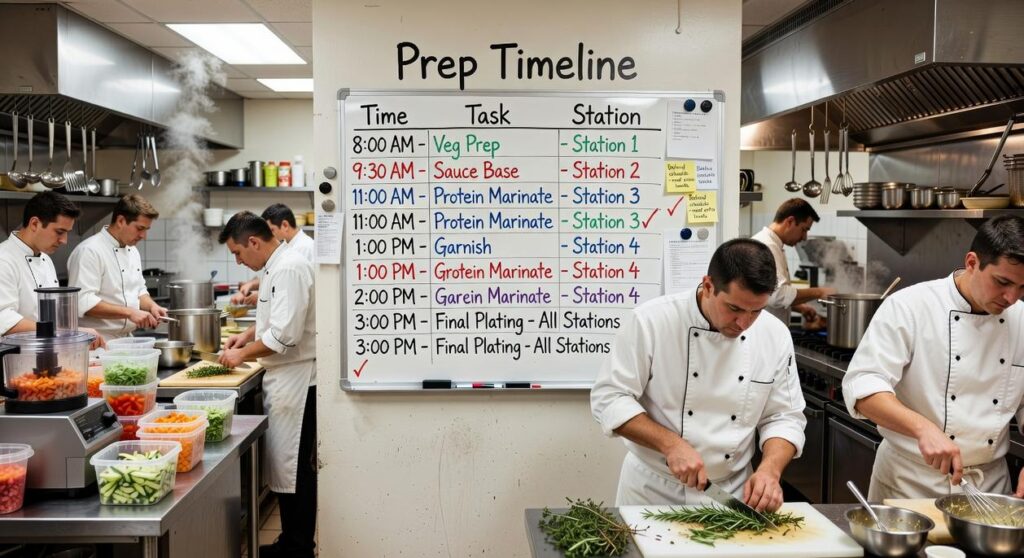
Step 3: The Kitchen Prep Masterplan: Your Timeline for Success

Let’s be honest—some people think a prep timeline is overkill. “Why plan every minute? Cooking should be spontaneous!” they argue. And sure, spontaneity has its charm (especially when you’re casually whipping up pancakes on a Sunday morning). But when you’re hosting anything from a formal dinner to an international food night, relying on winging it? That’s a recipe for stress.
Here’s the deal. A timeline doesn’t stifle creativity—it frees it. With the big stuff handled in advance, you’re not frantically searching for the cumin while your sauce bubbles over. You’re relaxed, confident, and maybe even sipping a pre-dinner drink.
Let’s talk specifics:
- One Week Before: Lock down your theme and menu. This is when the vision comes together. Make a smart shopping list—divide your pantry essentials from your fresh produce. Bonus: this helps with budgeting too.
- Three Days Before: Time for your first grocery run. Stock up on non-perishables. Start prepping anything that gets better with time—think spice-rich marinades or doughs that benefit from a slow rest (sourdough bakers, you get it).
- One Day Before: Grab your fresh ingredients, and do the full mise en place (French for “everything in its place”). Chop, measure, organize. Set the table now—it’s one less thing to worry about.
- Day Of: Your mission? Assemble, cook, and serve. With prep behind you, executing feels smooth—even fun. Who knew hosting could be this breezy?
Pro tip: Print your timeline or write it on a whiteboard—it’s shockingly satisfying to cross things off.
So even if you’re a “go-with-the-flow” type, trust us—structure on the front end means freedom on the day.
Step 4: Creating an Immersive Atmosphere
The right atmosphere doesn’t just complement a meal—it amplifies it. Studies show that ambient factors like music and lighting can enhance flavor perception by up to 15% (Oxford’s Crossmodal Research Lab). That’s why curating the vibe is as important as the recipe itself.
Let’s break it down:
-
Soundtrack: A Harvard Business Review study found that music influences dining duration and satisfaction. So if you’re making tapas for international food night, stream instrumental flamenco—it’s not just background noise, it’s flavor reinforcement.
-
Decor: In a Cornell hospitality experiment, diners exposed to regional decor rated their meals 20% more “authentic.” A few saffron-toned napkins or sprigs of basil in glass jars? Instant transformation.
-
Signature Drink: Even a simple Rioja or spiced mocktail can underscore your menu theme. (Pro tip: Match aromas between your drink and main dish for an extra sensory one-two punch.)
In short: DETAILS MATTER. A truly immersive setup tricks your brain—in the best way—into experiencing food more fully. Keep the focus multisensory, and the compliments will roll in faster than you can refill the wine.
To inspire your culinary creations, don’t forget to check out our collection of unique dishes at Cwbiancarecipes that will transport your taste buds around the globe without ever leaving your kitchen.
Your Passport to Culinary Adventure
The idea of organizing an international food-themed dinner can feel overwhelming—we’ve all been there. Too many moving parts, too many cuisines, and somehow not enough time.
But now, you have the full roadmap. This guide breaks it into clear, manageable steps to turn that stress into excitement. From choosing your theme to building the perfect menu and prep timeline, you’re set up for success.
You came here looking for a way to bring the world to your table. Mission accomplished.
Using a focused idea, balanced planning, and creative confidence, you’re ready to host an unforgettable international food night—without the stress.
So here’s what to do next: Pick one of the global themes from this guide. Mark a date on your calendar. Start prepping for your international food night tonight.
We’ve helped countless hosts make magic in their kitchens—now it’s your turn.
 Deyvanna Zelthanna writes the kind of kitchen prep mastery content that people actually send to each other. Not because it's flashy or controversial, but because it's the sort of thing where you read it and immediately think of three people who need to see it. Deyvanna has a talent for identifying the questions that a lot of people have but haven't quite figured out how to articulate yet — and then answering them properly.
They covers a lot of ground: Kitchen Prep Mastery, Global Food Trends, Culinary Pulse, and plenty of adjacent territory that doesn't always get treated with the same seriousness. The consistency across all of it is a certain kind of respect for the reader. Deyvanna doesn't assume people are stupid, and they doesn't assume they know everything either. They writes for someone who is genuinely trying to figure something out — because that's usually who's actually reading. That assumption shapes everything from how they structures an explanation to how much background they includes before getting to the point.
Beyond the practical stuff, there's something in Deyvanna's writing that reflects a real investment in the subject — not performed enthusiasm, but the kind of sustained interest that produces insight over time. They has been paying attention to kitchen prep mastery long enough that they notices things a more casual observer would miss. That depth shows up in the work in ways that are hard to fake.
Deyvanna Zelthanna writes the kind of kitchen prep mastery content that people actually send to each other. Not because it's flashy or controversial, but because it's the sort of thing where you read it and immediately think of three people who need to see it. Deyvanna has a talent for identifying the questions that a lot of people have but haven't quite figured out how to articulate yet — and then answering them properly.
They covers a lot of ground: Kitchen Prep Mastery, Global Food Trends, Culinary Pulse, and plenty of adjacent territory that doesn't always get treated with the same seriousness. The consistency across all of it is a certain kind of respect for the reader. Deyvanna doesn't assume people are stupid, and they doesn't assume they know everything either. They writes for someone who is genuinely trying to figure something out — because that's usually who's actually reading. That assumption shapes everything from how they structures an explanation to how much background they includes before getting to the point.
Beyond the practical stuff, there's something in Deyvanna's writing that reflects a real investment in the subject — not performed enthusiasm, but the kind of sustained interest that produces insight over time. They has been paying attention to kitchen prep mastery long enough that they notices things a more casual observer would miss. That depth shows up in the work in ways that are hard to fake.