

I’ve seen more cooking routines derailed by a messy spice cabinet than by overcooked pasta or burnt toast.
If you’re here, chances are your spice rack is more chaos than calm — jars toppling, duplicates piling up, and time wasted searching while something burns on the stove. We’ve all been there.
But here’s the good news: spice rack organization doesn’t have to be another project that overwhelms you. It can actually make cooking smoother, faster, and even more enjoyable.
This guide walks you through a clear, tested system for organizing your spices — not just to make your kitchen look better, but to make it work better.
We’ve drawn from years of hands-on culinary experience and the real-life layout challenges cooks face in both test kitchens and busy homes. What you’ll find here isn’t just theory — it’s practical, kitchen-tested advice.
You’ll come away with the tools to declutter, customize your setup, and finally enjoy a cooking space that supports how you actually cook.
Step 1: The Essential Pre-Organization Purge
Let’s get one thing clear: before you organize, you declutter.
Take Everything Out. Whether it’s a drawer, cabinet, or rotating rack (we’re looking at you, spice carousel of mystery), empty it completely. You can’t assess what you have until you see it all—yes, even the jar of cloves from your last holiday baking sprint.
Do a Freshness Check. Here’s the reality: spices lose their punch over time. Color faded? Aroma weak? It’s time to toss. A good rule of thumb is ground spices last 1–2 years, and whole spices 3–4 years (unless you’re into antique cooking shows).
Decant and Combine. Doubles? Combine them into one clean jar (no shame—we’ve all panic-bought extra cumin). This is your moment to decide: do you want a uniform look with matching containers, or go for functional chaos?
Create a Master List. Write everything down. This avoids re-buying the fifth paprika and sets you up for a smarter spice rack organization in the next phase.
Pro Tip: Keep a list on your phone for easy reference while shopping.
Step 2: Choose Your Organizing Philosophy
So you’ve got the spice haul—now comes the fun (and surprisingly strategic) part: how to organize it.
There’s no universal “correct” method, but selecting the right philosophy can make everyday cooking faster, reduce waste (no more buying paprika you already own), and make your spice rack look like it belongs on a cooking show set.
Let’s break down your top options—with benefits and drawbacks included.
Method A: Alphabetical Order
This is the filing cabinet of spice storage. If you know exactly what you’re looking for (say, coriander), you’ll spot it in seconds.
Pros: Ultra-efficient for quick finder-types.
Cons: Doesn’t help if you tend to grab spices in combos (hello taco night).
Method B: By Frequency of Use
Popular among busy home chefs. Keep your daily MVPs—salt, black pepper, garlic powder—front and center. Paprika or fennel? Back row.
Pros: Great for saving time in the moment.
Cons: Can spiral into a free-for-all if neglected. (Let’s be honest: spice entropy is real.)
Method C: By Cuisine or Flavor Profile
Group your go-tos by global zone—Italian, Indian, Middle Eastern. Oregano and basil live together, so do cumin and turmeric.
Pros: Streamlined cooking for themed meals.
Cons: Some spice overlap causes confusion. Where does cinnamon go—baking or Moroccan?
Method D: By Type
This is your spice’s version of genre-sorting. Baking spices (like nutmeg and cloves), dried herbs, chiles, etc., all get grouped.
Pros: Visually clean and instinctive.
Cons: Not always the fastest when cooking on the fly.
Pro tip: Whichever system you choose, label jar tops if they’re in a drawer. Saves loads of neck craning.
Try combining two methods if your stash is huge—just don’t overthink it. The best spice rack organization is one you’ll actually maintain.
Step 3: Select the Right Storage Hardware
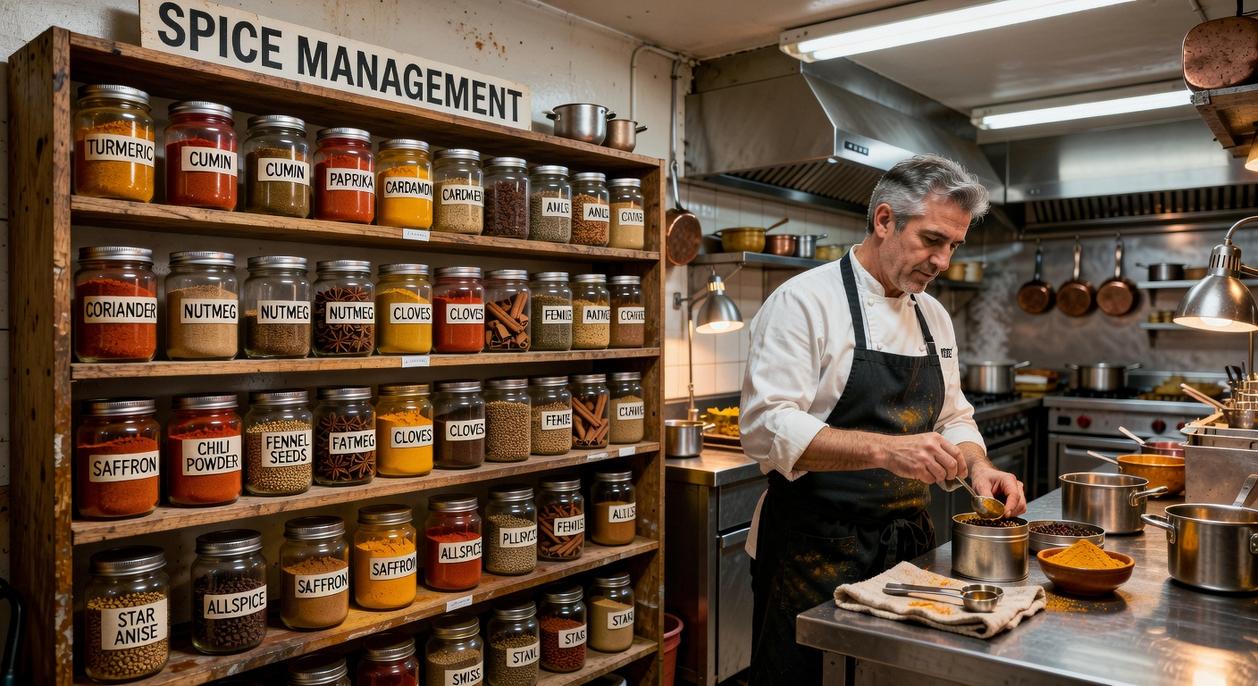
Let’s clear something up: picking the “right” storage hardware isn’t just about aesthetics—it’s about function, flow, and how fast you can grab that smoked paprika mid-sauté.
So when someone says “just toss your spices in a drawer,” it sounds easy… until you’re hunting for cinnamon behind five jars of chili powder. This is where strategy steps in.
Organizing your spices depends on the space you have—and how you cook. Let’s break it down.
1. For Cabinets – The Tiered Shelf or Lazy Susan
These tools help maximize vertical space—basically, they give your cabinet levels, so you can actually see the spices stacked behind. Bonus points if you use clear acrylic risers—these transparent platforms let you read labels quickly (no more lifting ten jars to find cumin).
Pro tip: Group spices by cuisine—think Italian, Indian, baking—to make finding flavors even faster.
2. For Drawers – The Drawer Insert
These angled trays lay jars on their sides, making every label readable at once. No more mystery bottles. But here’s where people mess up: they skip measuring drawer depth. If the insert doesn’t fit, your spice rack organization becomes a spatial headache (and nobody wants to return drawer gear twice).
3. For Walls or Small Spaces – Magnetic Tins or Wall-Mounted Racks
Hear us out: These aren’t just space-saving, they’re eye candy. A sleek wall-mounted rack or grid of magnetic tins turns your spice setup into wall art. Plus, super accessible—you’ll actually remember to use turmeric more than once a year.
4. The Uniform Look – Matching Jars
There’s something satisfying about opening a cabinet to clear jars with neatly labeled lids. Matching sizes make stacking and fitting easy. The downside? Time and money. You’ll spend time transferring every spice, and sure, those jars add up cost-wise. But for the clean, uniform finish—it might just be worth it.
At the end of the day, investing in the right storage is like mise en place for your pantry. Think of it as prepping your spices to perform.
Step 4: Pro-Tips for Labeling and Maintenance
Let’s face it—finding the cumin when you’re halfway through cooking is not a fun game. A solid spice rack organization system saves time, money, and sanity (especially when you’re mid-recipe and your hands are covered in olive oil).
Start with clear labeling. Use labels on the lid for drawer storage or the side for upright racks. Doing both? That’s ideal. Invest in waterproof labels or reusable chalk markers—they won’t smudge even after that inevitable spill of turmeric.
Here’s a smart kicker: the “purchase date” hack. Place a tiny sticker with the date under each jar. That way, doing a freshness audit won’t become a guessing game (ground spices lose potency after about 6–12 months—source: McCormick Spice Company).
Use the bulk spice system: keep a mini jar out front and the bulk refill sealed in the pantry. It keeps everyday cooking smooth, and your budget happier.
Finally, set a reminder to do a 10-minute quarterly tidy-up. A quick wipe, a few label checks, and boom—spice nirvana, restored.
Pro tip: Group spices by cuisine (like Indian, Italian, Mexican) for even faster cooking sessions.
Once you’ve transformed your spice rack into a culinary haven, you’ll be inspired to experiment with fresh flavors, making it the perfect time to explore vibrant concoctions in our article on Veggie Drinks Cwbiancarecipes.
Your New Foundation for Flavor
It’s easy to lose control of your kitchen when your spices are scattered, outdated, or stacked three jars deep. You came here to fix that—and now you can.
You’ve got the complete toolkit to end the chaos: purge what you don’t use, choose an organizing method that fits your space, and invest in the right hardware to bring it all together.
No more buying a third jar of paprika or digging for cumin mid-recipe.
Spice rack organization isn’t just about aesthetics—it saves time, reduces waste, and brings joy back into your cooking routine.
Start simple: pick one drawer or cabinet this weekend and work through the steps. Rediscover how easy and inspiring cooking can be when your spices work for you, not against you.
 Aaron Meurereid writes the kind of global food trends content that people actually send to each other. Not because it's flashy or controversial, but because it's the sort of thing where you read it and immediately think of three people who need to see it. Aaron has a talent for identifying the questions that a lot of people have but haven't quite figured out how to articulate yet — and then answering them properly.
They covers a lot of ground: Global Food Trends, Explore More, Kitchen Prep Mastery, and plenty of adjacent territory that doesn't always get treated with the same seriousness. The consistency across all of it is a certain kind of respect for the reader. Aaron doesn't assume people are stupid, and they doesn't assume they know everything either. They writes for someone who is genuinely trying to figure something out — because that's usually who's actually reading. That assumption shapes everything from how they structures an explanation to how much background they includes before getting to the point.
Beyond the practical stuff, there's something in Aaron's writing that reflects a real investment in the subject — not performed enthusiasm, but the kind of sustained interest that produces insight over time. They has been paying attention to global food trends long enough that they notices things a more casual observer would miss. That depth shows up in the work in ways that are hard to fake.
Aaron Meurereid writes the kind of global food trends content that people actually send to each other. Not because it's flashy or controversial, but because it's the sort of thing where you read it and immediately think of three people who need to see it. Aaron has a talent for identifying the questions that a lot of people have but haven't quite figured out how to articulate yet — and then answering them properly.
They covers a lot of ground: Global Food Trends, Explore More, Kitchen Prep Mastery, and plenty of adjacent territory that doesn't always get treated with the same seriousness. The consistency across all of it is a certain kind of respect for the reader. Aaron doesn't assume people are stupid, and they doesn't assume they know everything either. They writes for someone who is genuinely trying to figure something out — because that's usually who's actually reading. That assumption shapes everything from how they structures an explanation to how much background they includes before getting to the point.
Beyond the practical stuff, there's something in Aaron's writing that reflects a real investment in the subject — not performed enthusiasm, but the kind of sustained interest that produces insight over time. They has been paying attention to global food trends long enough that they notices things a more casual observer would miss. That depth shows up in the work in ways that are hard to fake.