

You want to make your kitchen more eco-friendly—but where do you even begin?
Between confusing labels, plastic packaging, and energy-hungry appliances, turning good intentions into consistent action can feel overwhelming. But here’s the truth: small, strategic changes can make a big impact—without sacrificing the flavor, comfort, or convenience that make your kitchen the heart of your home.
This guide is packed with kitchen sustainability tips that are actually doable. We’ve tested each one in real-life settings to ensure they make sense for busy home cooks.
You’ll get a clear, no-fluff roadmap—from smarter grocery shopping to cleaner cleanup routines—that will help you create a greener kitchen today, not someday.
Start at the Source: Mindful Shopping and Sourcing
Think of your grocery list like a recipe for a better planet: every ingredient counts.
Buying local isn’t just a quaint weekend plan—it’s like choosing homegrown herbs over dried imports. Shopping at farmers’ markets slashes food miles (that’s the distance your food travels from farm to fork), supports hometown growers, and brings you fresher, more flavorful produce. It’s not just feel-good—it tastes better too.
Eating seasonal works the same way. Ever tried a tomato in February? Compare that to one ripened under the summer sun—you’ll know why timing matters.
Now let’s talk about packaging. If your produce comes swaddled like a smartphone, it’s time to break up. Instead: use reusable produce bags, buy from bulk bins, and choose glass over plastic. (Bonus: your pantry looks straight out of Pinterest.)
On proteins? Picture plant-based options as a well-stocked spice rack—full of variety you didn’t know you were missing. And when choosing meat or seafood, think sustainable sourcing, just like you’d think quality when buying olive oil.
Kitchen sustainability tip: Keep a designated fridge zone for “eat me first” items to reduce food waste.
The Biggest Win: Conquering Food Waste
Let’s face it—there are two kinds of kitchens: the ones where food gets used up efficiently… and the ones where lettuce goes to wilt in peace behind a jar of old pickles.
When it comes to fighting food waste, home cooks are often caught between good intentions and bad habits. But here’s where having the right strategies matters. Let’s compare four key approaches and see how they stack up.
FIFO (First In, First Out) vs. Random Organization:
You might think placing the new groceries up front is harmless, until you find last week’s yogurt growing a beard. The FIFO method—used by pros—prioritizes older products first. It’s like giving your leftovers a fair shot at dinner (because no one wants to organize a fridge funeral every Friday).
Root-to-Stem Cooking vs. Scrap Tossing:
Tossing carrot tops and broccoli stems? That’s like throwing away money. Root-to-stem cooking lets you turn “waste” into wow—from pickle-brined rinds to citrus zest sugars. In contrast, your trash can won’t thank you for your culinary laziness.
Smart Storage vs. “Wherever It Fits” Storage:
Tossing produce in random drawers isn’t strategy—it’s sabotage. Smart storage means tomatoes on the counter, herbs in damp towels, and apples away from everything (their ethylene game is strong). Proper placement extends shelf life dramatically. Pro tip: A labeled bin for “eat-me-first” foods reduces daily decision fatigue.
Composting vs. Landfilling Scraps:
Even with the best habits, some waste is unavoidable. But instead of trashing it, composting turns peels and grounds into garden gold. Whether it’s a bin under the sink or a local drop, composting beats landfilling hands-down.
Remember: Use kitchen sustainability tips in the section once exactly as it is given. It may sound simple, but that sentence alone underscores the most impactful mindset shift.
Small swaps, big wins. That’s how you conquer food waste—one thoughtful choice at a time.
Cook Smarter: Energy and Water Conservation
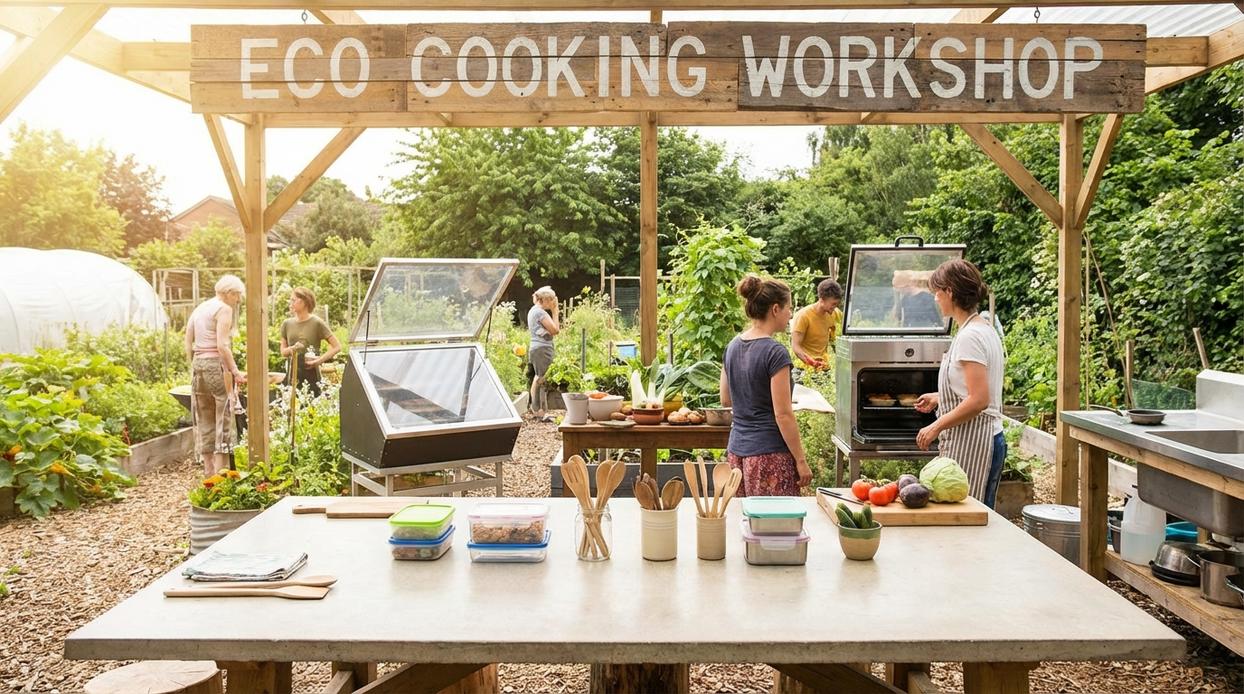
It’s tempting to think that saving energy in the kitchen requires a total renovation—solar panels, induction cooktops, and the latest smart fridges. But let’s be honest: most of us aren’t ripping out our countertops anytime soon (unless you moonlight on HGTV).
Here’s what most guides won’t tell you—small, smarter habits often outweigh heavy-duty upgrades. That’s where the real, long-term savings come from, both in utility costs and environmental impact.
Take cookware sizing. Everyone talks about turning off lights and unplugging chargers, but few realize that using a small pan on a large burner wastes up to 40% of the heat produced (Department of Energy). Matching pan-to-burner is low-effort energy efficiency.
Then there’s residual heat. Many people are surprised that you can actually turn off the oven or electric stove a few minutes before your food’s done. The ambient heat is plenty to finish the job—especially for dishes like roasted veggies or casseroles.
Critics argue batch cooking isn’t realistic for those with unpredictable schedules. Fair. But the energy footprint of reheating leftovers is far smaller than cooking from scratch—every night. (Bonus: fewer dishes to wash midweek. You’re welcome.)
When it comes to efficient appliances, competitors rave about Energy Star—but overlook how users actually use them. Running a dishwasher half-full burns through more water than hand-washing effectively. That’s where our kitchen sustainability tips come in.
Pro tip: Always run dishwashers only when full, and use eco-mode if available.
So yes, buying efficient appliances helps—but smarter habits in how we cook and clean? That’s the real game changer.
For more insights on how your senses impact kitchen behavior, check out flavor psychology how our senses influence taste.
Ditch the Disposables: The Reusable Revolution
I’ll admit it—I used to go through paper towels like they were napkins at a BBQ. (Gone in 60 seconds.) But after realizing how fast they rack up in cost and landfill space, I made the switch to reusable cloth towels. And guess what? My kitchen’s still clean, my wallet’s happier, and I feel way less wasteful. Pro tip: old T-shirts make excellent rags—free and functional.
Now, don’t get me wrong. Plastic wrap has its place (especially for weirdly shaped leftovers), but I’ve become a huge fan of beeswax wraps and silicone lids. They’re not just eco-friendly; they’re stylish—yes, food storage can be cute—and they don’t stick to themselves like plastic wrap always insists on doing.
When it comes to cookware, I fully believe in buying once and buying right. Cast iron pans are basically kitchen royalty. They last forever, they improve with age, and they laugh at Teflon’s flakiness (literally).
Kitchen sustainability tips: Replace single-use items with reusable and long-lasting alternatives to reduce waste and save money.
Clean Green: Non-Toxic Kitchen Cleaning
Let’s clear something up: non-toxic doesn’t mean non-effective. A lot of folks assume that if it isn’t loaded with chemicals, it can’t get the job done. Not true.
Take this: mix equal parts white vinegar and water, then add citrus peels (lemon or orange works great). Let it sit for a few days. Boom—DIY cleaning power that cuts through grease, naturally.
Now about that sponge. Traditional ones are plastic-based and shed microplastics (tiny bits of plastic that pollute our water and food systems—yikes). Try switching to biodegradable alternatives like loofahs or coconut scourers. They’re tough on grime, gentle on the planet.
Kitchen sustainability tips in the section once exactly as it is given.
By embracing sustainable practices in the kitchen, such as utilizing every part of your ingredients and minimizing waste, you not only enhance your meals but also set the foundation for experimenting with flavors in ways that can help avoid common pitfalls in fusion cuisine – for more details, check out our Fusion Cuisine Mistakes to Avoid for Better Balance.
Your Eco-Friendly Kitchen Starts Today
You came here looking for real ways to build a more sustainable kitchen—and now, you’ve got them.
We know the biggest barrier is feeling like going green is too expensive or too difficult. But kitchen sustainability tips don’t have to be complicated. This guide has shown you exactly how to reduce waste, save energy, and swap in reusables—without overhauling your whole life.
You don’t need to be perfect. You just need to begin.
So here’s what to do next: Pick one of the kitchen sustainability tips that spoke to you most. Maybe it’s composting scraps. Maybe it’s switching to reusable wraps. Whatever it is, start today.
When you act on even one of these changes, you’re not just helping the planet—you’re easing the strain on your budget, too.
Thousands have used these kitchen sustainability tips to transform their spaces. You can too.
Small steps make a lasting difference. Start yours now.
 Deyvanna Zelthanna writes the kind of kitchen prep mastery content that people actually send to each other. Not because it's flashy or controversial, but because it's the sort of thing where you read it and immediately think of three people who need to see it. Deyvanna has a talent for identifying the questions that a lot of people have but haven't quite figured out how to articulate yet — and then answering them properly.
They covers a lot of ground: Kitchen Prep Mastery, Global Food Trends, Culinary Pulse, and plenty of adjacent territory that doesn't always get treated with the same seriousness. The consistency across all of it is a certain kind of respect for the reader. Deyvanna doesn't assume people are stupid, and they doesn't assume they know everything either. They writes for someone who is genuinely trying to figure something out — because that's usually who's actually reading. That assumption shapes everything from how they structures an explanation to how much background they includes before getting to the point.
Beyond the practical stuff, there's something in Deyvanna's writing that reflects a real investment in the subject — not performed enthusiasm, but the kind of sustained interest that produces insight over time. They has been paying attention to kitchen prep mastery long enough that they notices things a more casual observer would miss. That depth shows up in the work in ways that are hard to fake.
Deyvanna Zelthanna writes the kind of kitchen prep mastery content that people actually send to each other. Not because it's flashy or controversial, but because it's the sort of thing where you read it and immediately think of three people who need to see it. Deyvanna has a talent for identifying the questions that a lot of people have but haven't quite figured out how to articulate yet — and then answering them properly.
They covers a lot of ground: Kitchen Prep Mastery, Global Food Trends, Culinary Pulse, and plenty of adjacent territory that doesn't always get treated with the same seriousness. The consistency across all of it is a certain kind of respect for the reader. Deyvanna doesn't assume people are stupid, and they doesn't assume they know everything either. They writes for someone who is genuinely trying to figure something out — because that's usually who's actually reading. That assumption shapes everything from how they structures an explanation to how much background they includes before getting to the point.
Beyond the practical stuff, there's something in Deyvanna's writing that reflects a real investment in the subject — not performed enthusiasm, but the kind of sustained interest that produces insight over time. They has been paying attention to kitchen prep mastery long enough that they notices things a more casual observer would miss. That depth shows up in the work in ways that are hard to fake.